
Category Archives: Technology

What does the AI boom mean for businesses today?

In this post, I explore the transformative impact of artificial intelligence and why it’s not just a passing trend, it’s reshaping industries and redefining the way we work and interact. This is your guide to understanding and capitalising on the AI-driven future.

(1) AI as the new OS: AI will soon be a standard interface across industries, where today’s “wrappers“ become tomorrow’s essential middleware.

(2) Data fuels AI, models refine it: data may be the oil of the digital world, but models are the refineries. The real power will lie with those developing the best tools for fine-tuning and deployment.

(3)AI commoditisation is here: as AI becomes standard, the real value shifts to what else you bring – user experience, distribution, and brand.

(4) Rise of the ‘ AI-native’ workforce: the next generation of leaders are those coming up with AI as second nature. Hiring them now could be a game-changer for our teams and companies.

(5) Prompts over code: crafting effective AI prompts will soon matter more than the code itself. A new wave of “AI whisperers” will be the key players.

(6) Opportunities are massive: this market has staggering potential. While some well-backed companies will make big strides, there’s room for small, niche ideas – ideal for those who can pinpoint a killer feature and build a strong community.

(7) Boring businesses with big data: the standout AI opportunities may not be in flashy tech companies but in established data-heavy businesses ready to leverage AI. (I’m working on a list.)

(8) Rise of “AI naturalists”: as AI saturates the market, a counter-movement will emerge, similar to the anti-crypto wave we saw. Every tech cycle brings a pushback.

(9) When every company is ‘ AI-driven’: the term ‘AI’ loses its weight when it’s everywhere. We’re already on that path.

This is just the beginning, the opportunities are out there for everyone, not just the tech giants.

What does it really mean to be customer centric?

Being customer centric is not just about setting the right goals – it’s about creating a culture where every team member, no matter what team they’re in, is empowered to put the customer first and to focus on delivering results for the customer.

Here are some practical steps for leaders:

(1) Set the example: As leaders, we need to champion customer-centric behaviours and decisions in everything we do.

(2) Foster a unified vision: Align every department and team around a shared understanding of customer value (and how to measure it), ensuring consistency in the customer experience and journey.

(3) Empower teams: Give your teams the tools, autonomy and insights they need to solve customer problems proactively.

(4) Continuous learning: Encourage ongoing learning from customer feedback and market trends to stay ahead of evolving needs.

(5) Recognise and reward: Celebrate and reward employees who demonstrate customer centric actions and decisions, fostering a culture of putting the customer first.

Think of it as a continuous journey not a one off project or initiative with leadership as the driving force behind it. By creating the right environment, we ensure both our customers and teams thrive together.

Building a Winning Customer Success Strategy

A successful customer success strategy goes beyond solving problems, it’s about ensuring customers achieve their desired outcomes and feel supported throughout their journey with your product or service.

Here are the key components for a working strategy:

(1) Understanding customer needs: Develop detailed buyer personas and map the customer journey to understand goals, challenges, and preferences.

(2) Clear communication: Maintain open, transparent communication to address queries promptly and ensure customers feel valued.

(3) Proactive engagement: Regularly engage with your customers, not just when problems arise. Proactive outreach (with value each time) demonstrates your commitment to their success.

(4) Structured onboarding: Guide new customers with a well planned onboarding process that includes training, tutorials and resources for smooth adoption.

(5) Leverage technology: Use customer success tools and CRMs to centralise data, track interactions and automate tasks, allowing teams to focus on building relationships (that grow).

(6)Measuring success: Set KPIs to assess satisfaction and retention, reviewing metrics regularly to refine and adapt your approach.

(7) Ongoing support: Provide continuous support across various channels, ensuring customers have access to help whenever they need it.

(8) Continuous improvement: Regularly evaluate and enhance your strategy based on customer feedback and evolving needs.

(9) Cross-departmental collaboration: Align sales, marketing, engineering, product and support teams to create a seamless, unified approach to customer success.

By focusing on these components, companies can foster customer satisfaction, retention and long-term loyalty.

Transforming Lives One Small Habit at a Time: A Glimpse into ‘Atomic Habits’

Last year was a very difficult and sad year for me and my family, losing my mum and my dad within 7 months of each other. I’m blessed with a wonderful family both here and my sister and her lovely family over in Australia (where my mum and dad also lived).

My sister has always (and is still) a super positive and life affirming person (and loved very much) and she’s always looking how to be more mindful and help others (much like our mum).

I’d been over in Australia last year and the year before visiting to see mum and dad and my sister and she’d mentioned that she was reading Atomic Habits and she loved it. I’d heard of it before and read bits but hadn’t got the book. Well she changed that for me and bought it me for my birthday last year – and what a book.

This compelling book delves into the science of habits, offering actionable insights for individuals looking to reshape their lives through the power of tiny, consistent improvements.

My key takeaways:

(1) The Compound Effect of Small Habits: Clear articulates how minor adjustments and improvements can accumulate over time, leading to significant outcomes. It’s the small habits, compounded daily, that lead to remarkable results. Think compound interest for self growth.

(2) The Four Laws of Behaviour Change: The book introduces a simple yet powerful framework for building good habits and breaking bad ones: make it obvious, make it attractive, make it easy, and make it satisfying.

(3) The  Importance of Identity Change: One of the book’s central themes is the idea that true change is identity-based. By focusing on who we wish to become, we can naturally foster habits that align with our desired identity.

(4) Systems Over Goals: Clear argues that focusing on systems rather than goals is the key to long-term success. By improving our systems, we make progress automatic and sustainable.

This is a must read and particularly for professionals in the fast-paced technology sector. “Atomic Habits” offers a roadmap to achieving personal excellence and enhancing productivity. The principles outlined by Clear are not only applicable to personal development but also resonate with organisational growth and efficiency.

Grab yourself a copy now!


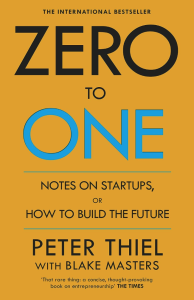
Unveiling the Secrets of Monopoly: A Dive into ‘Zero to One

In the ever-evolving landscape of the technology industry, where innovation is the currency of success, Peter Thiel’s “Zero to One” emerges as a beacon for entrepreneurs and visionaries aiming to carve unique paths in the market. This seminal work, not just a book but a manifesto for innovation, challenges the conventional wisdom of competition and champions the pursuit of creating something new.

My big takeaways…

(1) The Value of Monopolies: Thiel argues that true progress in business comes not from competition, but from creating monopolies – companies achieve success by building unique products that create new markets.

(2) The Power of Vertical Progress: The book distinguishes between horizontal progress (or globalisation) and vertical progress (or technology). Thiel emphasises that going from 0 to 1 (vertical progress) is where the magic happens, creating new and valuable innovations.

(3) The Importance of Founding Teams: The dynamics of the founding team are crucial. Thiel discusses the significance of having a small, tightly-knit group of individuals who share a common vision and complement each other’s skills.

(4) The Start-up Mindset: “Zero to One” offers insights into the mindset required to build a successful start-up. It stresses the importance of having a strong vision and the willingness to pursue bold ideas that go against the grain.

Why ‘Zero to One’ is a Must-Read…

For you and any professionals in the technology sector, especially those in leadership roles like myself, Thiel’s insights provide a fresh perspective on innovation and competition. The book encourages us to think differently about how we approach business strategy and product development, advocating for the creation of value in uncharted territories.

“Zero to One” is more than just a book; it’s a new lens through which to view the potential of our ventures in the technology sector. Whether you’re a budding entrepreneur or a seasoned executive, Thiel’s provocative ideas will inspire you to rethink your approach to business and innovation.

Highly recommended. Click here to grab a copy now.

The Next Chapter in Customer Engagement: Beyond QBRs to Customer Value Reviews

It’s clear we’re on a transformative journey when we look at how to deliver real value to our customers, but how do we effectively implement this shift?

1️⃣ Customised Value Pathways: It’s about creating tailored review schedules that resonate with each customer’s unique journey, not a one-size-fits-all approach.

2️⃣ Deep-Dive into Customer Worlds: Stepping into our customers’ shoes, understanding their challenges and ambitions, and aligning our services to support their strategic objectives.

3️⃣ Ongoing Value Assessment: Continuous interaction is key. We’re talking regular check-ins, not just quarterly reviews, to ensure we’re constantly adapting to and meeting evolving needs.

4️⃣ Accurate Trend Analysis: Keeping a close eye on business trends and progress is essential. It ensures that the value we deliver is not only current but also predictive and proactive.

This evolution in our approach is more than just a change in schedule; it’s a fundamental shift in mindset. What steps are you taking to make your customer reviews more dynamic and value-driven?

Evolving Customer Success: The Path Ahead In 2024

The feedback on my last post about the changing landscape of Customer Success was so good to see and it’s clear we’re going through a transformation now. The insights from the community have been invaluable. We’re in a period of some big and need changes for our industry and it’s going to be an exciting 12 months ahead.

A recap on the big insights and changes coming…

1️⃣ : It’s crucial to differentiate between what matters to the economic buyer vs. other stakeholders at our customers. A happy user base is great, but if we’re not hitting the metrics that matter to those who make the renewal decisions, we’re missing the mark.

2️⃣ 2024′ : Focusing on core values and specific metrics is more critical than ever. As we streamline Customer Success roles, we need to redefine our expectations to combat burnout. It’s about working smarter, not harder.

3️⃣ : The conversation has shifted to identifying and improving the outcomes that matter most and providing value there. This is where we can truly demonstrate our value and impact, without overwhelming our teams.

4️⃣ : There’s a growing realisation that being a great CSM isn’t just about technical expertise or sales prowess. It’s about understanding, listening, and responding to customer needs. The role of the CSM is evolving beyond traditional boundaries.

5️⃣ . : In our haste to solve problems, are we losing sight of the customer’s voice? It’s time to refocus on what really matters – understanding and addressing customer needs, not just showcasing our expertise.

Let’s keep this conversation going. How are you planning to navigate these changes in your organisation? What strategies are you adopting to align with the evolving role of Customer Success?

THE Customer Success Book

This is one of the original and still one of the best reads on what customer success is all about, where it came from and why it’s so critical to businesses today – and written by 3 customer success greats, 2 of which I know very well and have had the privilege of meeting and sharing a beer or 2 with…

→ ‘Customer Success: How Innovative Companies Are Reducing Churn and Growing Recurring Revenue’

4 really amazing pearls of wisdom that resonated with me in the book:

👉🏼 1. Building Relationships: It’s not just about closing sales. Nurture relationships and trust will sprout, paving the way for customer loyalty.

👉🏼 2. Understanding Customer Journey: Know the journey your customers embark on with your product. This empathy drives the customization that ensures customer satisfaction.

👉🏼 3. Proactive Problem-Solving: Anticipate potential issues. Be proactive, not reactive. It’s about preventing fires, not just extinguishing them.

👉🏼 4. Success is a Culture: Imbue every facet of your organisation with customer success. It’s not just a department, it’s a culture.

Unlocking Customer Lifetime Value: The Key to Long-term Success

Introduction:

Customer Lifetime Value (CLTV) holds the key to long-term success in business. Unraveling the potential of CLTV is crucial for building lasting relationships and driving sustained revenue growth.

Understanding CLTV:

Customer Lifetime Value is not solely about revenue but about fostering enduring value for customers. It is a vital metric for gauging an organization’s growth and prosperity. For instance, consider a subscription-based service like Netflix, where a loyal customer who subscribes for years contributes substantially to the company’s CLTV.

Viewing Value from Different Angles:

CLTV is more than just revenue; it encompasses different perspectives of value. Identifying and aligning with the customer’s definition of value is crucial. An example could be a luxury car brand that offers exceptional customer service, providing value that extends beyond the purchase.

Applying CLTV in Practice:

Measuring CLTV beyond revenue involves assessing advocacy, referrals, and recommendations, which are immensely valuable. Forecasting CLTV requires a careful consideration of customer segments and past profiles. For example, a software company may analyze user adoption metrics to predict long-term value.

Customer Success Has Changed

“Customer Success has changed”

The world has changed and very rapidly over the last few years and our what were “traditional” customer success teams and functions have shifted massively and there’s more change to come.

  1. Burnout was already high but now churn is rising and so are layoffs.
  2. The SaaS model that defined much of the 2010s and early 2020s was predicated upon having access to near-unlimited capital.
  3. Customer Success was already struggling through three distinct crises: Overextended roles, high stress and unrealistic expectations, and previous leniency on metrics.

It’s a wakeup call! We need to think differently and shift:

  1. Streamline Customer Success roles to focus on core value delivery.
  2. Adjust job expectations and provide sufficient support to prevent burnout.
  3. Identify which metrics matter to customers upfront and focus all your energy on driving those to demonstrate the value your solution provides early and often.

We need to start refocusing on customer value and change our thinking and approach.