Tag Archives: Technology

Customer Success Strategy for Startups: What Every CEO Needs to Know

Customer success isn’t just for big enterprises with huge CS teams and complex platforms. For startups, having a clear customer success strategy from day one can make the difference between scaling fast and hitting a wall.

Here’s what every CEO should know…

Why customer success matters early

Retention drives valuation. Investors look at net revenue retention and churn before anything else. The earlier you embed customer success into your operating model, the stronger your foundations for growth.

Keep it simple at the start

You don’t need a big team or expensive software in the early days. Focus on three building blocks:

  • A simple customer journey map (from onboarding to renewal)
  • Success plans with clear goals for your customers
  • A basic feedback loop so you know what’s working and what isn’t

Avoid overcomplicating

Many founders rush into tools and processes they don’t need yet. Don’t build a big expensive tech stack on day one, when a spreadsheet and customer conversations will do. Keep it lean, but disciplined.

Building customer success early pays dividends later. If you’re shaping your strategy and want experienced input, let’s connect.

Retention is the true test of whether your customer success strategy is working – here’s why so many startups fail on that point.

How Founders Can Reduce SaaS Churn in the First 12 Months

Churn is the silent killer of early-stage SaaS. You can win new customers, but if they leave quickly, growth stalls before it even begins. In the first twelve months, reducing churn is the single biggest lever for sustainable growth.

Here are three practical ways founders can make an immediate impact.

(1) Onboarding is everything:

The first experience sets the tone. If customers don’t see value quickly, they drift away. Onboarding should be more than product walkthroughs – it’s about proving outcomes. Make the first 30 days a success story, with clear milestones and check-ins.

(2) Measure adoption, not just logins:

Too many founders track vanity metrics like account sign-ups. What really matters is adoption – are users actually achieving what they came for? Define success behaviours in your product and measure against them. Low adoption early on is the clearest warning signal for churn.

(3) Talk to customers before it’s too late:

Silence doesn’t mean satisfaction. Set up feedback loops and proactive check-ins, especially in the first 90 days. Health scores, NPS and customer calls give you the insight to fix issues before they become cancellations.

Reducing churn isn’t glamorous, but it’s the foundation of growth. If you’re a founder struggling to keep customers, I can help.

But the bigger picture is clear – most SaaS startups fail not from lack of customers, but from lack of retention.

The Role of Technology in Scaling Customer-Led Growth

Technology is a powerful enabler of customer-led growth, but it’s not a silver bullet. The best results come from combining the right tools with a customer focused strategy and human insight.

Customer centricity

How Technology Supports CLG?

➜ Personalisation at scale: Tools like CRM platforms, customer success platforms and customer data platforms enable you to tailor interactions based on individual customer needs and expectations.

âžœ Proactive support: AI and predictive analytics can identify at-risk customers, allowing you to intervene early. And provide  rapid valuable responses.

➜ Streamlined processes: Automation reduces the time spent on routine tasks, giving your teams more bandwidth to focus on delivering value.

Balancing Tech with the Human Touch

Technology can enhance customer experiences, but it can’t replace the human connection. Striking the right balance ensures customers feel supported and valued, not like just another number.

Investing in technology that aligns with your customer-led growth strategy can help you scale your efforts, deliver consistent value, and drive sustainable growth.

How To Help Your Customers To Succeed

If top CEOs were asked to answer the question “How do you help your customer succeed?”, their responses would focus on a mix of strategic, operational, and customer-centric approaches.

Here’s how they might structure their strategies…

1. Customer-Centric Approach:

  • Listen Actively: Continuously gather customer feedback through surveys, interviews, and data analytics to understand their evolving needs.
  • Tailor Solutions: Design products and services that align with customer goals and adapt offerings based on feedback to ensure they provide maximum value.
  • Provide Personalised Experiences: Leverage data to offer personalised interactions, focusing on anticipating customer needs before they arise.

2. Innovation & Agility:

  • Innovate Relentlessly: Invest in R&D to develop cutting-edge solutions that keep customers ahead of their competition.
  • Be Agile: Cultivate an organisational culture of flexibility to quickly respond to customer needs and market shifts.
  • Partner with Technology: Use AI, machine learning, and automation to offer faster, more accurate service and insights that help customers succeed.

3. Customer Success as a Partnership:

  • Co-create Value: Work collaboratively with customers, treating them as partners. Build solutions together to ensure mutual growth and success.
  • Educate and Enable: Invest in educating customers on how to leverage your products/services to drive their success through training and resources.
  • Outcome-Based Focus: Move beyond transactions to a relationship built on helping customers achieve their strategic goals, tracking metrics that matter to them.

4. Operational Excellence:

  • Proactive Support: Implement predictive customer service models to address issues before they become problems.
  • Invest in the Right People: Build a world-class customer success team that is empowered to support and delight customers.
  • Streamline Processes: Ensure that your internal processes are efficient and can scale to deliver a seamless, reliable experience for customers.

5. Long-Term Strategic Alignment:

  • Align on Vision: Ensure that your company’s mission and values align with those of your customers, reinforcing trust and a shared vision of success.
  • Measure Success Together: Establish KPIs and success metrics that both you and your customers can track, making sure progress towards their goals is transparent.
  • Foster Long-Term Relationships: Build loyalty by consistently delivering results, staying connected to customers’ long-term business objectives, and offering ongoing value.

6. Sustainability & Responsibility:

  • Sustainable Solutions: Ensure your products and services support customers’ ESG (Environmental, Social, and Governance) goals, offering sustainable practices that benefit both the customer and the environment.
  • Corporate Responsibility: Be a responsible partner, ensuring your values on diversity, inclusion, and community engagement align with those of your customers to foster trust.

OpenAI’s AI Agent Operator: A New Shift

AI developments are continuing to accelerate and we’re moving more to enabling autonomous complex problem solving. OpenAI’s upcoming AI Agent Operator looks to be a fantastic development in this on-going evolution, with AI agents now handling more complex tasks and processes, with little human intervention – and this has real potential to reshape how we work and deliver value to customers.

Here’s why this matters:

(1) From Task Automation to Intelligent Execution: This role bridges the gap between AI capability and business execution, allowing operators to guide AI agents to not just complete tasks but to now navigate complex and specific workflows. It’s a shift to more fully integrated, decision making systems.

(2) Human-AI Collaboration Redefined: Operators will act as intermediaries, steering AI agents to align with our human goals. It’s not about replacing people but enabling us to focus on the more strategic, creative or high impact areas while AI handles the repetitive or highly technical tasks.

(3) Unparalleled Productivity Gains: AI’s ability to autonomously manage complex, multi-step tasks will unlock efficiency at a scale that we simply haven’t seen before. Think of workflows that can update themselves, customer requests being handled instantly (whilst really being personal) and our administrative workloads lightened.

(4) Integration Without Overhaul: The AI Agent Operator is designed to work with existing systems, not to replace them. This means businesses can adopt it with minimal disruption while benefiting from its capabilities almost immediately.

(5) A New Kind of Expertise: This role introduces a hybrid skillset, part strategic thinker and part technical specialist. It’s an exciting new opportunity to shape how AI supports businesses across many different industries.

The potential here is incredible. For businesses, it’s a chance to rethink operations and invest in what drives real value for customers, and for professionals (us humans), it’s a new frontier of expertise in guiding and collaborating with AI.

This isn’t just about doing things faster – it’s about doing them smarter and better (which we all want). The organisations that embrace this shift early will lead the way.

What are your thoughts on this new wave of AI? How could this change your approach to work or innovation?

What does the AI boom mean for businesses today?

In this post, I explore the transformative impact of artificial intelligence and why it’s not just a passing trend, it’s reshaping industries and redefining the way we work and interact. This is your guide to understanding and capitalising on the AI-driven future.

(1) AI as the new OS: AI will soon be a standard interface across industries, where today’s “wrappers“ become tomorrow’s essential middleware.

(2) Data fuels AI, models refine it: data may be the oil of the digital world, but models are the refineries. The real power will lie with those developing the best tools for fine-tuning and deployment.

(3)AI commoditisation is here: as AI becomes standard, the real value shifts to what else you bring – user experience, distribution, and brand.

(4) Rise of the ‘ AI-native’ workforce: the next generation of leaders are those coming up with AI as second nature. Hiring them now could be a game-changer for our teams and companies.

(5) Prompts over code: crafting effective AI prompts will soon matter more than the code itself. A new wave of “AI whisperers” will be the key players.

(6) Opportunities are massive: this market has staggering potential. While some well-backed companies will make big strides, there’s room for small, niche ideas – ideal for those who can pinpoint a killer feature and build a strong community.

(7) Boring businesses with big data: the standout AI opportunities may not be in flashy tech companies but in established data-heavy businesses ready to leverage AI. (I’m working on a list.)

(8) Rise of “AI naturalists”: as AI saturates the market, a counter-movement will emerge, similar to the anti-crypto wave we saw. Every tech cycle brings a pushback.

(9) When every company is ‘ AI-driven’: the term ‘AI’ loses its weight when it’s everywhere. We’re already on that path.

This is just the beginning, the opportunities are out there for everyone, not just the tech giants.

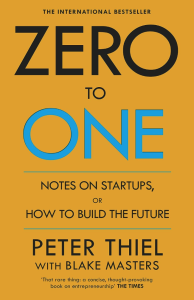
Unveiling the Secrets of Monopoly: A Dive into ‘Zero to One

In the ever-evolving landscape of the technology industry, where innovation is the currency of success, Peter Thiel’s “Zero to One” emerges as a beacon for entrepreneurs and visionaries aiming to carve unique paths in the market. This seminal work, not just a book but a manifesto for innovation, challenges the conventional wisdom of competition and champions the pursuit of creating something new.

My big takeaways…

(1) The Value of Monopolies: Thiel argues that true progress in business comes not from competition, but from creating monopolies – companies achieve success by building unique products that create new markets.

(2) The Power of Vertical Progress: The book distinguishes between horizontal progress (or globalisation) and vertical progress (or technology). Thiel emphasises that going from 0 to 1 (vertical progress) is where the magic happens, creating new and valuable innovations.

(3) The Importance of Founding Teams: The dynamics of the founding team are crucial. Thiel discusses the significance of having a small, tightly-knit group of individuals who share a common vision and complement each other’s skills.

(4) The Start-up Mindset: “Zero to One” offers insights into the mindset required to build a successful start-up. It stresses the importance of having a strong vision and the willingness to pursue bold ideas that go against the grain.

Why ‘Zero to One’ is a Must-Read…

For you and any professionals in the technology sector, especially those in leadership roles like myself, Thiel’s insights provide a fresh perspective on innovation and competition. The book encourages us to think differently about how we approach business strategy and product development, advocating for the creation of value in uncharted territories.

“Zero to One” is more than just a book; it’s a new lens through which to view the potential of our ventures in the technology sector. Whether you’re a budding entrepreneur or a seasoned executive, Thiel’s provocative ideas will inspire you to rethink your approach to business and innovation.

Highly recommended. Click here to grab a copy now.

Embracing Cultural Evolution in the Tech-Driven World

I wrote about company culture over 10 years ago and that previous post has been getting a lot of attention over recent weeks. That made me think – how has culture changed over the years and how important now is the interplay with culture, technology and both employee and customer success.

Since 2013 when I wrote the last culture article, the integration of advanced technology in the workplace has transformed company cultures globally. And this evolution necessitates a reassessment of how company culture and technology together foster a conducive environment for employee motivation and customer success. The rise of remote work, digital collaboration tools and AI-driven analytics has not only changed how we work but also how we interact, learn, and grow within organisations.

The core principles of a strong company culture – continuous hiring, encouraging entrepreneurship and leading by example – remain crucial. However, their application has transformed. Today, fostering a culture of adaptability, inclusivity and digital savviness is imperative. Encouraging a culture that embraces change, values digital skillsets and promotes a work-life balance in a digitally connected world is key to attracting top talent.

The transparent and data-driven culture facilitated by technology leads to more informed decision-making, enhancing employee satisfaction and efficiency. A culture that leverages technology to understand customer needs better and respond to them swiftly contributes significantly to customer success.

In essence, the synergy of a robust company culture and cutting-edge technology is a powerful driver of growth. It’s about creating an environment where motivated employees thrive, leading to innovative solutions and heightened customer satisfaction.

How does your company culture stack up in 2024? And what’s the future of a good company culture?

Combined thoughts on “Everything As A Service“

These are some thoughts captured and co-written by Stephen Danelutti and Jason Noble, two long time contributors to the world of Everything As a Service (XaaS) who met again recently. We realised our common background and insights and decided to produce this combined thought piece – hope you enjoy.

Background

We worked at Sony together many years back and only discovered this recently when we met. Funny how our orbits work as people and then you collide.

We worked in different parts of a division at Sony called DADC, which invented the CD and developed digital content streaming services. This was before iPod, iPhone and Spotify. Stephen has written about that, including a demo: The end of ownership and the rise of usership. This experience was a good precursor to our thinking on Everything as a Service (XaaS).
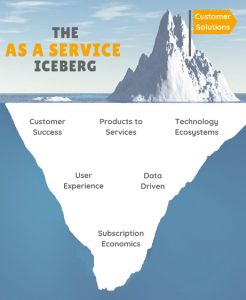
The as a service iceberg

We met when we both were (and still are) professionally in Customer Success management leadership roles, a function of SaaS companies that is, amongst others, being translated into XaaS. So we are both rather well positioned to talk on this topic.

Stephen is writing an eBook on the subject which you can find out more about here. We decided to use that as a framework (The As a Service Iceberg) for exploring our mutual thoughts. While we divided subtopics up between us, we worked collaboratively throughout to edit and progress in tandem and what you read is very much a joint effort.


Everything as a Service (XaaS)

There is a distinction between the purely technological view which is where the term XaaS comes from and the one we refer to in this article. In ours we have jumped from technology to other industries – we have crossed the chasm. Essentially we are talking about taking the learnings from the Software as a Service (SaaS) industry and applying it to other industries.

Some examples

SaaS has been around now for a good few years, and we’ve seen other as-a-service philosophies and approaches pop up since – most related to technology (e.g. infrastructure as a service) but there are more and more examples now across all industries. Some great ones include:

  • Mobility and transport – think of an extension of your Oyster card
  • Property – renting plus add-on services and services like airbnb
  • Shopping – home delivery pre-prepared meals
  • Healthcare – shaving services
  • Airlines – yes even some airlines are often monthly subscription
  • Digital content – not just music, but now movies, TV, games and books
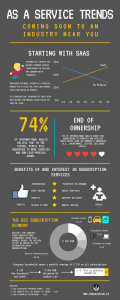
It’s not just about what is being delivered, but how it is being delivered – and the level of experience offered that takes these examples into the true as-a-service arena.

In times of crisis, like COVID-19, there is a stronger need to justify new technology services and innovations, and many businesses are looking at rapid return on investments as part of it. We will see a continued development of new as-a-service ideas coming over the coming years that have been accelerated by the need to innovate and change.

The as a service iceberg

1. Customer solutions

This is the outward manifestation of all of the others and is all about solving problems and meeting needs. No longer is something purchased just for its intrinsic value but what it will help a person or organisation achieve. Several sub components or theories support this and some have been around a while:

  • Systems thinking views a system as a cohesive conglomeration of interrelated and interdependent parts and in the case of customer solutions, it represents how products are now increasingly being viewed as tangible goods plus services.
  • Business outcomes management entails identifying, measuring and achieving business outcomes for the customer, often with the help of Customer Success teams (see the next influence).
  • Jobs to be done theory is a framework for understanding customer needs and innovating around them with new offerings.
  • Solution selling is an approach taken by sales teams that incorporates a consultative approach to identifying solutions to best meet a customer’s needs in the most cost efficient way, especially with multiple product offerings.

More elaborated on this in this post: As a Service trend research – customer solutions.

2. Customer success

With the shift to XaaS, the way we interact, work with and deliver to our customers has also evolved. Our customers’ expectations have risen rapidly and we need to focus on what experience they require and want, and also what it is that they are ultimately looking for, in outcome or value terms. The idea from SaaS vendors, that gave rise to customer success, is that they work with customers proactively to drive value and growth for the customer, in turn justifying the vendors offering. The old reactive way was letting the customer figure things out for themselves after the sale. This has been a monumental industry shift and it’s one that is still evolving and maturing. The role of a customer success manager (CSM) is one of the fastest growing roles today as more and more companies understand that it is critical to their own and their customers’ growth and ultimate success.

CSMs are generalists and facilitators, skilled across the business, commercial, technology and product functions. They are uniquely positioned to be able to guide and help customers achieve the outcomes they need, through the (technology) services they acquire. CSM’s act as trusted advisors, facilitators, business and growth consultants, analysts, project and programme managers, even as change managers for their customers.

3. From products to services

This fits alongside the customer solutions view where products play a role in a much wider ecosystem that includes services. It’s not just about technology and technology products, it’s much broader. Having said that, technology does enable this to a far greater degree, see next point. Think about how Apple has taken its iPhone and built an app (and services) ecosystem that serves to add value to Apple hardware and creates new revenue streams for them and third party app developers. These apps are increasingly being sold on a subscription basis which is also interrelated. For the broader context which incorporates service-dominant logic, check out this post: As a Service trend research – products to services.

4. Technology ecosystems

Technology has played a massive part in the shift to as a service. As we’ve seen the rise of technology services over the last 30 years, many more traditional companies (for example content creators and manufacturers) are now working with technology partners, for their technology development and almost outsourcing it. The focus now is about being enabled and empowered to use technology, as opposed to having to own and build it directly. Think of your internal IT department and how that’s changed. They’re now there to help you better utilise technology within the business and integrate with much wider technology ecosystems with external partners.

5. Being data-driven

Collecting data and understanding usage so that it drives greater insight, which in turn drives better products and services, has become a competitive differentiator. Translating this data into meaningful insights is the real challenge that only the leading companies are mastering. Questions like who is using what, how much and to what end, with which outcomes, need answering. You also need to consider where the data is, who can access it and whether this falls within regulatory compliance or not. These are big questions that require a holistic approach. Data science is a growing field that serves this area well and smart as a service companies are investing heavily into building their capabilities in this. A data-driven, decision making culture is also imperative.

6. Customer and user experience

The terms user and customer experience are front and centre now when it comes to technology. This has been driven by the rise of the consumer application ecosystem and high bars being set by companies like Amazon, Netflix and Apple (amongst many others) in how they interact with customers. Customer experience starts from the initial engagement with your customers and potentially through your marketing campaigns and outreaches. It then follows through with onboarding and implementation, project management, delivery, support and more. The challenge is ensuring that you deliver a constant customer experience and that it is specific to that customer (or segment of customers). The key to remember is that not every customer needs, wants or expects the same levels of customer experience.

7. Subscription economics

One of the biggest aspects of the as a service business model is the shift away from one-off payments to recurring payments, or subscription economics. Products and/or services are purchased in this way (on subscription) and sometimes even on an on-demand basis. Especially for B2B firms, this has shifted the financial impact from big capital expenditures upfront (capex) to more manageable on-going operational expenditure over time (opex). Many factors that this model of payment enables, need to be considered. One of the foremost on the vendors side is the emphasis this places on ensuring the customer continues to renew their subscription (not churning) by providing excellent service. For this the customer success managers role is key. Conversely, this makes the model very flexible for customers who can stop payments if they are not receiving any benefit or value. Take a look at this post for some graphics covering other aspects of what makes subscription models successful: Subscription Model Success Factors.

Other examples of where we’re seeing this shift

The shift to as a service as we’ve said started off in the world of technology but we are now seeing it everywhere across all industries. Some great examples include:

  • Gaming – all the big players like Sony and Microsoft have game subscription services, and even Google and Apple are now also in this booming market. From our days back at Sony, this way an area that we both were both closely involved with – the digitisation of content and streaming services.
  • Groceries – this is one to watch. The big supermarkets all have loyalty plans and they know what we like to buy and when. It won’t be long before this data is used to determine what our weekly grocery deliveries should be and we pay for a subscription service and food is just delivered at the frequency we pay for, and best of all most of what is delivered is exactly what we need.
  • Technology – infrastructure as a service, platform as a service and more. With the like of AWS and Azure, we can now subscribe to technology services including CPU power and data storage (and the related sub-services) and we can expand or contract our technology operations in response to demand from our own customers (this is all part of the big shift we’ve seen over recent years out to the cloud).

Other considerations

Customer centricity

There’s a lot of talk today about organisations making moves to be more customer centric and it’s something we have spoken and written about many times before (see link here to previous blogs). It boils down to really understanding your customers, as an organisation and being able to be agile and responsive to change as your customers’ needs and requirements change.

From a previous talk Jason did with a firm of VCs, the reason being customer centric is important is not only the obvious – that your customers stay loyal when they have good experiences – but also as our customers keep evolving and changing, so too are the ways that we operationalise that and support those customers.

A great way to think about customer centricity that really resonates with us is – “A business is customer centric when it delivers on-going growing value to and for their customers.“

Business transformation

Becoming an as a service business is not something you can easily tack on, like a plaster. That’s because of the overarching reach of so many of the factors listed above that are required for success. So wholesale transformation is often required for long term success. That doesn’t mean you have to do it all at once – see diagram for different stages and an approach you could take. This is like a product portfolio view of the transformation and tackles it one stage at a time, eventually rolling up into wholesale organisational transformation.

Keep an eye out for more joint blog posts we’ll be working on in the future.